€56
Audio Technica ATH-M20x Professional Monitor Headphones -Free Gift RRP £5!
A wired closed-back pair at an entry price that keeps the low strings and tuba audible and shuts out a noisy room.
Wired · Closed-back · Studio monitor
Soundtracks · Explainer ·
John Williams built the shark in Jaws from two low notes, E and F, played by tuba and low strings, and from one idea: make them faster and louder as the danger gets closer.
This explainer covers why the pair works, why the silences matter as much as the notes, and how to listen. A toy lets you move the shark and hear the pulse speed up. Headphones with a good low end show it best.
Jaws · Dir. Steven Spielberg · 1975 · Music by John Williams
The shark in Jaws has a sound before it has a shape. The sound is a figure of two notes, E and F, a half-step apart, that rock back and forth in the low register, played by tuba and low strings. It has no tune to hum and no key to settle into. It just alternates, and then it speeds up.
The account that most sources repeat is that John Williams first played the two notes on a piano for Steven Spielberg, who laughed, thinking it was a joke. Williams's reply, as Wikipedia's article on the soundtrack paraphrases it, was that the sophisticated approach Spielberg wanted did not match the film he had just seen. Played at different speeds, the idea won the director over. (One scholar, Alexandre Tylski, argues the notes sit nearer F and F-sharp than E and F; most sources give E and F.)
Brainless music that gets louder and gets closer to you, something is gonna swallow you up.
John Williams, 2012 Los Angeles Times interview, quoted by Dr Alison Cole, University of Sydney
This is a toy, not a recording from the film. Slide the shark closer and watch the two notes speed up. Press Sound on to hear a rough imitation of them; small speakers lose the low end, so headphones show it best.
Music writers give several reasons. The notes are so close together that the pair feels unresolved, and because it lacks a clear tonal centre, it never feels like it arrives anywhere. Alternating two notes at rising speed was not new: Cole points to Dvořák's New World Symphony of 1893 as an earlier user of the idea. What Williams adds is the register. According to the Wikipedia account, he told the tuba player he wanted it written high enough to sound "a little more threatening", rather than handed to a horn.
It also does the shark's work for it. In the film's opening, the monster is mostly unseen, and the sound carries the threat. Cole writes that the fear of what you cannot see taps survival instincts, and some scholars link the pulse to breathing or to a heartbeat. Filmtracks' review makes a sharper point: the acceleration is meant to match "the blood pressure of the shark, not that of the audience".
The same review notes that the motif drops out when the shark is elsewhere, so the false alarms in the film have none of it. That is the control. If the two notes played all the time, they would become wallpaper. Because they appear only when the threat is real, the audience learns the code in minutes and starts to dread the first low E before anything has happened on screen.
The motif is the famous part, but not all the score. Filmtracks singles out the music for the boat Orca as the most enjoyable in the film, a jovial, swashbuckling theme, and says Williams later bends it toward panic once the hunt turns dark. The town of Amity gets pleasant, Americana-flavoured music, and the recording sessions included a stringless band for the town's brass-band music, with Spielberg himself reported to have played a slightly out-of-tune clarinet to give the band an amateur feel. Menace works because the score also knows how to be cheerful.
The score won Williams the Academy Award for Best Original Score, and the American Film Institute ranked it sixth in its list of the greatest American film scores in 2005.
Start with the album's first two cues, "Main Title" and "Chrissie's Death", then "Out to Sea" for the swashbuckling side. The 1975 LP was a re-recording of about half an hour of music; a 2000 Decca edition and a 2015 Intrada set bring in more of the original film recordings, and a 50th-anniversary remaster came out in 2025. Filmtracks' reviewer thinks the score is best appreciated in context but rates the expanded releases highly.
Listen on headphones with a good low end. The tuba and basses sit at the bottom of the range, so closed-back studio pairs and noise cancelling models make the pulse clearer, and the quiet passages gain from a room that is quiet too. Gear is optional: the idea survives a phone speaker, you just lose some of the weight. Keep the volume modest at first; the score gets much louder than it starts.
The film and the album are on disc and in digital form, and availability on streaming services varies by country. Which editions of the soundtrack you can find also varies by country.
Int. the prop room · continuous
Affiliate links, marked sponsored. We may earn a commission at no extra cost to you. Picks that suit the film; products aren't scored. Prices checked 24 Oct; every shop is on each product page.
A wired closed-back pair at an entry price that keeps the low strings and tuba audible and shuts out a noisy room.
Wired · Closed-back · Studio monitor
A step up in the same family, widely used for monitoring, with the low-end detail to follow a pulse that speeds up and swells.
Wired · Closed-back · Studio monitor
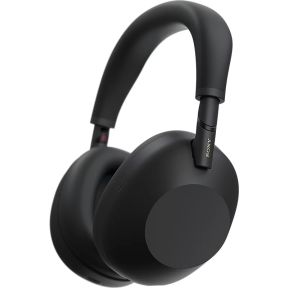
Noise cancelling takes the room out of the picture, so the quiet stretches between the two notes stay quiet.
Wireless · Noise cancelling · Over-ear