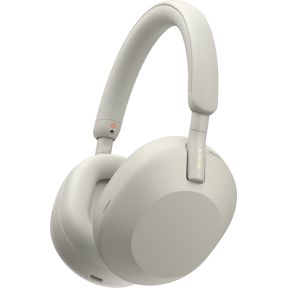
€33
Sony WH-CH520 Draadloos Zwart
A light, cheap pair for putting a score on while you cook or commute. Fine for the piano line; the deepest synth bass is where it runs out.
Wireless · On-ear · Bluetooth
Soundtracks · Explainer ·
The Halloween theme feels like a stumble because its five-beat bar will not split evenly, so the groups of threes suddenly shrink to twos just as your foot settles in.
Carpenter says his father taught him five-four time on a pair of bongos. Switch between the patterns below and hear the limp for yourself.
Explainer · John Carpenter, Halloween (1978) · the main theme
Tap your foot to most film music and you get an easy answer: one, two, three, four. The Halloween theme refuses to give you one. It repeats a small piano figure that sounds simple, yet most people cannot say why it feels like a stumble. The answer is arithmetic, and you can hear it for yourself below.
The theme is usually described as being in 5/4: five beats to the bar instead of the four that pop, rock and most film cues lean on. Carpenter has said where it came from. In a PBS American Masters piece he recalls that his father bought him a pair of bongos at 13 and taught him five-four time, and in another interview he remembers his father suggesting that timing for the score.
My father bought me a pair of bongos for Christmas when I was 13 and he taught me five-four time.
John Carpenter, PBS American Masters
Five is an awkward number. It will not split into two equal halves, so any pattern built on it has to choose a lopsided grouping. One common way of counting the riff is in ten short pulses, grouped 3 + 3 + 2 + 2: two longer steps, then two shorter ones. Your ear settles into the pattern of threes, then the groups suddenly shrink to twos, and the phrase seems to lurch forward before it has finished. That is the limp.
Switch between the two while it plays. The even version is the same ten pulses with the groups evened out, and it sounds like a clock. The uneven one sounds like someone walking toward you who occasionally changes their stride. A steady, relentless sixteenth-note pulse underneath is part of why the theme has been likened to a ticking clock.
Rhythm is the cheapest horror tool there is. A listener who cannot predict the next beat stays slightly braced, and a bracing listener is easy to scare. The score does this with almost nothing: a repeating piano line, a deep synthesizer bass and a fidgety beat. Carpenter has said he sat at the piano and played in octaves, and that is where the theme came from.
The score is also an example of working with what was at hand. Carpenter was not a trained notation reader, and the synthesizer programming was handled with the help of Dan Wyman, a music professor. The end credits jokingly name the "Bowling Green Philharmonic Orchestra", which was Carpenter himself. Reports differ on how long the score took to record, from a handful of days to two weeks, so treat any single number with caution.
Music did a lot of the work in how the film plays. Carpenter has said that an executive who saw the film without music found it not scary, and that it became scarier once the score was in. Carpenter has named Bernard Herrmann and Ennio Morricone among his influences.
Where to hear it: the score has been released on several labels over the years, including a 40th anniversary edition. Availability varies by country, so check your usual streaming service or record shop.
Int. the prop room · continuous
Affiliate links, marked sponsored. We may earn a commission at no extra cost to you. Picks that suit the film; products aren't scored. Prices checked 6 Oct; every shop is on each product page.
A light, cheap pair for putting a score on while you cook or commute. Fine for the piano line; the deepest synth bass is where it runs out.
Wireless · On-ear · Bluetooth
Closed-back studio headphones that isolate well and keep low notes clear, which is what a synth score like this one asks for.
Wired · Closed-back · Studio monitor
Active noise cancelling makes a quiet room even quieter, so the low synth drone and the gaps between notes both land.
Wireless · Noise cancelling · Over-ear